
Links are no longer simple redirects. In 2026, they are part of your marketing infrastructure.
Every campaign — from paid ads to QR codes on packaging — depends on a link. That link determines whether you can measure performance, attribute conversions, and optimize results.
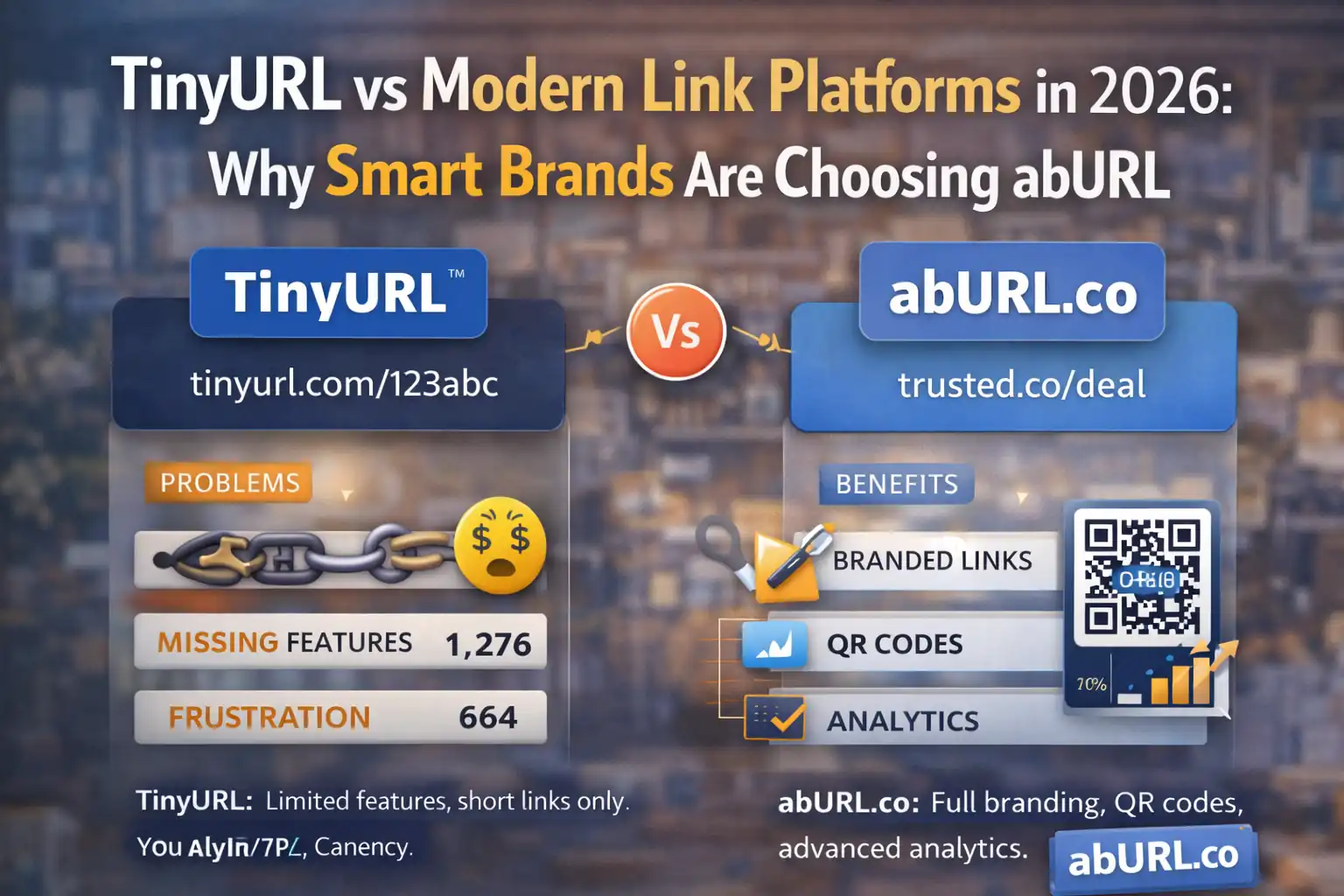
While legacy shorteners like TinyURL helped popularize link shortening years ago, today’s brands need more than compressed URLs. They need branded control, measurable QR codes, and actionable analytics.
This is where modern platforms like abURL stand apart.
Why Basic Shorteners Like TinyURL Fall Short in 2026
TinyURL is widely known for quick link shortening. It is simple and fast. But simplicity alone is no longer enough for brands running performance-driven campaigns.
Traditional shorteners typically provide:
- Basic redirects
- Limited branding options
- Minimal analytics
- Little to no QR performance tracking
- No structured campaign management
For casual sharing, that may be sufficient. For serious marketing, it creates blind spots.
If your links cannot answer questions about traffic quality, engagement timing, and channel performance, you are operating with incomplete data.
Links Have Become a Performance Layer
Every modern campaign includes a link:
- Paid advertising
- Influencer collaborations
- Email newsletters
- SMS campaigns
- Social media bios
- Event badges and posters
- Product packaging
- In-store displays
That link is the bridge between attention and action.
When managed properly, it becomes a measurement layer that connects clicks to outcomes.
When managed poorly, it becomes a missed opportunity.
What Modern Brands Actually Need
In 2026, brands require link infrastructure that provides:
- Branded short links for credibility
- Dynamic control to edit destinations anytime
- Measurable QR codes for offline attribution
- Detailed analytics beyond surface-level click counts
- Centralized campaign management
Legacy shorteners focus on shortening. Growth-focused teams focus on intelligence.
abURL: Built for Brands That Care About Results
abURL is designed for creators, startups, agencies, and scaling businesses that treat links as assets — not afterthoughts.
It combines short links, QR codes, and analytics into a unified workflow.
Instead of juggling multiple tools, teams can manage performance in one place.
Branded Short Links That Increase Trust
Generic-looking links can reduce credibility, particularly in SMS, social media, and messaging platforms.
Branded short links:
- Improve click-through confidence
- Reinforce brand identity
- Create consistency across campaigns
- Look intentional and professional
Trust influences engagement. Engagement influences revenue.
QR Codes That Do More Than Redirect
QR codes are widely used in retail, hospitality, events, and advertising. But a QR code without tracking is just a doorway without insight.
With structured link management, QR scans become measurable events tied to campaign performance.
You can identify:
- Which placements generate engagement
- Which locations perform best
- When users are most active
- How offline materials convert into online behavior
This transforms QR codes into performance tools rather than decorative additions.
Analytics Designed for Decision-Making
Click counts alone do not reveal campaign quality.
Modern link analytics should help you understand:
- Traffic sources
- Geographic distribution
- Device usage
- Engagement patterns over time
- Channel effectiveness
This level of insight allows brands to:
- Optimize marketing spend
- Eliminate underperforming channels
- Refine messaging
- Scale high-performing campaigns
The goal is not more data. The goal is better decisions.
TinyURL vs abURL: The Real Difference
TinyURL focuses on shortening links.
abURL focuses on managing link performance.
That difference matters when:
- Running multi-channel campaigns
- Tracking offline-to-online conversions
- Managing multiple locations
- Reporting performance to clients or stakeholders
- Scaling brand visibility
As link intelligence becomes more central to marketing infrastructure, teams are moving toward platforms that combine branding, analytics, and flexibility — not just compression.
Why the 2026 Shift Matters
As digital engagement becomes more connected, links are increasingly viewed as an embedded connection layer between platforms, campaigns, and conversions.
The competitive advantage no longer lies in shortening a URL.
It lies in understanding what happens after the click — and optimizing accordingly.
If you want branded short links, measurable QR codes, and analytics that help you improve performance without enterprise complexity, you can build your link infrastructure at abURL.
Final Thought
In 2026, the question is not whether you need short links.
The question is whether your links are working hard enough for your brand.
When links become measurable, editable, and strategically managed, they stop being utilities — and start becoming growth assets.